
This is lesson twenty-three. This is towards one of our missions. Education. You’ll learn everything about marketing - from the basics to the most advanced strategies - for free, thanks to VellumWorks.
Why don’t people act the moment they discover your organisation?
Why do some supporters take weeks or months before donating?
Lavidge & Steiner’s Hierarchy of Effects Model explains the exact psychological steps people go through before they take action.
It shows that supporters don’t jump straight from “awareness” to “donation.”
They move through six stages, each one building on the last.
For charities, this model is gold - because once you understand the journey, you can design communication that guides people through it with clarity and purpose.
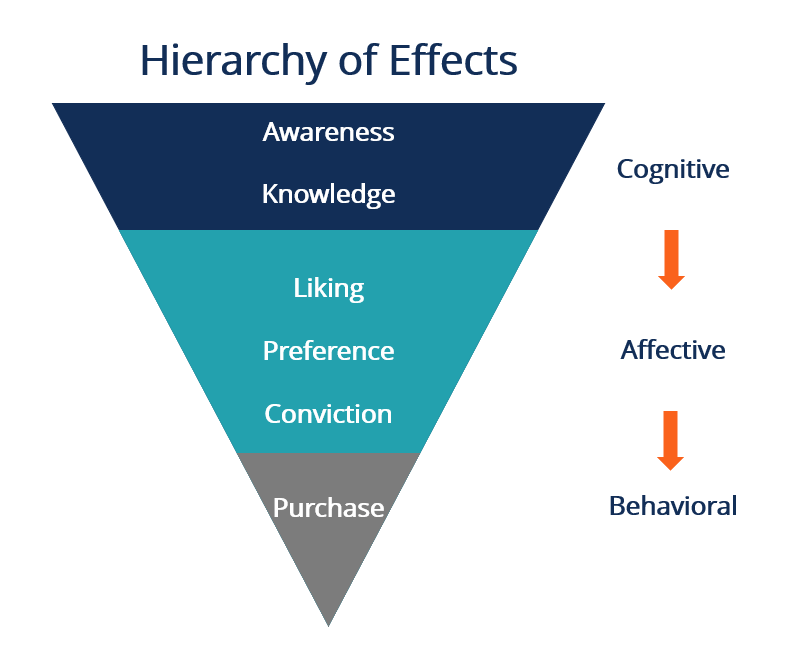
What is the Hierarchy of Effects Model?
The Hierarchy of Effects Model, created by Lavidge & Steiner, is a classic marketing framework that explains the step-by-step journey people go through before they take action — such as donating, volunteering, buying, or supporting a cause.
The model shows that people don’t jump straight from “hearing about you” to “acting.”
Instead, they move through six psychological stages, grouped into three phases:
1. Cognitive (Thinking)
Awareness: They learn that you exist.
Knowledge: They begin to understand what you do.
2. Affective (Feeling)
Liking: They develop positive feelings toward you.
Preference: They compare you to alternatives and choose you.
Conviction: They believe strongly enough to consider taking action.
3. Behavioural (Doing)
Action: They finally take the step - donate, join, buy, volunteer, or participate.
Phase 1: Awareness → Knowledge (Cognitive Stage)
This phase is all about thinking. Supporters learn that you exist and begin to understand what you do.
1. Awareness
Supporters first become aware of your charity, cause, or campaign.
This could come from:
social media
a friend’s recommendation
a news feature
a local event
a viral story
Your job: be visible, consistent, and clear about who you are.
2. Knowledge
People start learning more about your mission, your work, and your impact.
They explore your website, read posts, watch videos, or ask questions.
Your job: provide simple, accessible information that answers:
what you do
Why it matters
who benefits
how you’re different
Phase 2: Liking → Preference → Conviction (Affective Stage)
This phase is about feeling. Supporters develop an emotional connection and preference for your organisation.
3. Liking
Supporters begin to feel positively toward your cause.
Emotion takes centre stage — stories, visuals, and human connection matter.
Your job: spark empathy, hope, and emotional resonance.
4. Preference
Supporters compare you to other organisations or alternatives.
They decide you are the charity they trust most.
Your job:
show your uniqueness
highlight your impact
share social proof
reinforce credibility
5. Conviction
Supporters develop a strong belief in your mission.
They feel confident, prepared, and motivated to act.
Your job:
remove doubt
address questions
be transparent
reinforce why their action matters
Phase 3: Purchase/Action (Behavioural Stage)
6. Action
This is where supporters take the step you want:
donate
volunteer
fundraise
attend an event
sign up
advocate
join your newsletter
A clear, compelling call to action makes all the difference.
Why This Model Matters for Charities
Because people don’t convert instantly.
There’s a full emotional and cognitive journey behind every “yes.”
When you understand the stages, you can:
design better campaigns
nurture supporters over time
create messaging that matches each stage
stop expecting awareness posts to generate instant donations
build trust that leads to long-term support
The Hierarchy of Effects helps you meet supporters where they are, not where you want them to be.
10-Minute Exercise: Map Your Supporter Journey
Pick one current campaign and ask:
What creates awareness?
What builds knowledge?
What triggers liking?
What makes people prefer us over others?
What strengthens conviction?
What simplifies action?
Once you fill these in, your entire communication strategy becomes clearer.
Why is this important to know?
Because supporters rarely act the moment they hear about you. The Hierarchy of Effects shows that every donation, every volunteer sign-up, and every long-term relationship is the result of a journey.
When you know these stages, you stop expecting instant results and start designing communication that guides people thoughtfully through each step. This makes your marketing clearer, your storytelling stronger, and your supporter engagement far more effective.
At VellumWorks, we believe knowledge should be free. That’s why this series will guide you, step by step, through everything from the basics to the most advanced strategies in marketing: no jargon, no gatekeeping, just education that empowers.
